Writing ·
Alert fatigue is not a tooling problem
If your team has stopped reading the alerts, a better alerting tool will not save you.
What teams usually try first:
- Migrate to a new monitoring platform
- Add more dashboards
- Tune thresholds
- Add a second on-call tier
Same noise, nicer interface.
The actual cause is simpler and less comfortable:
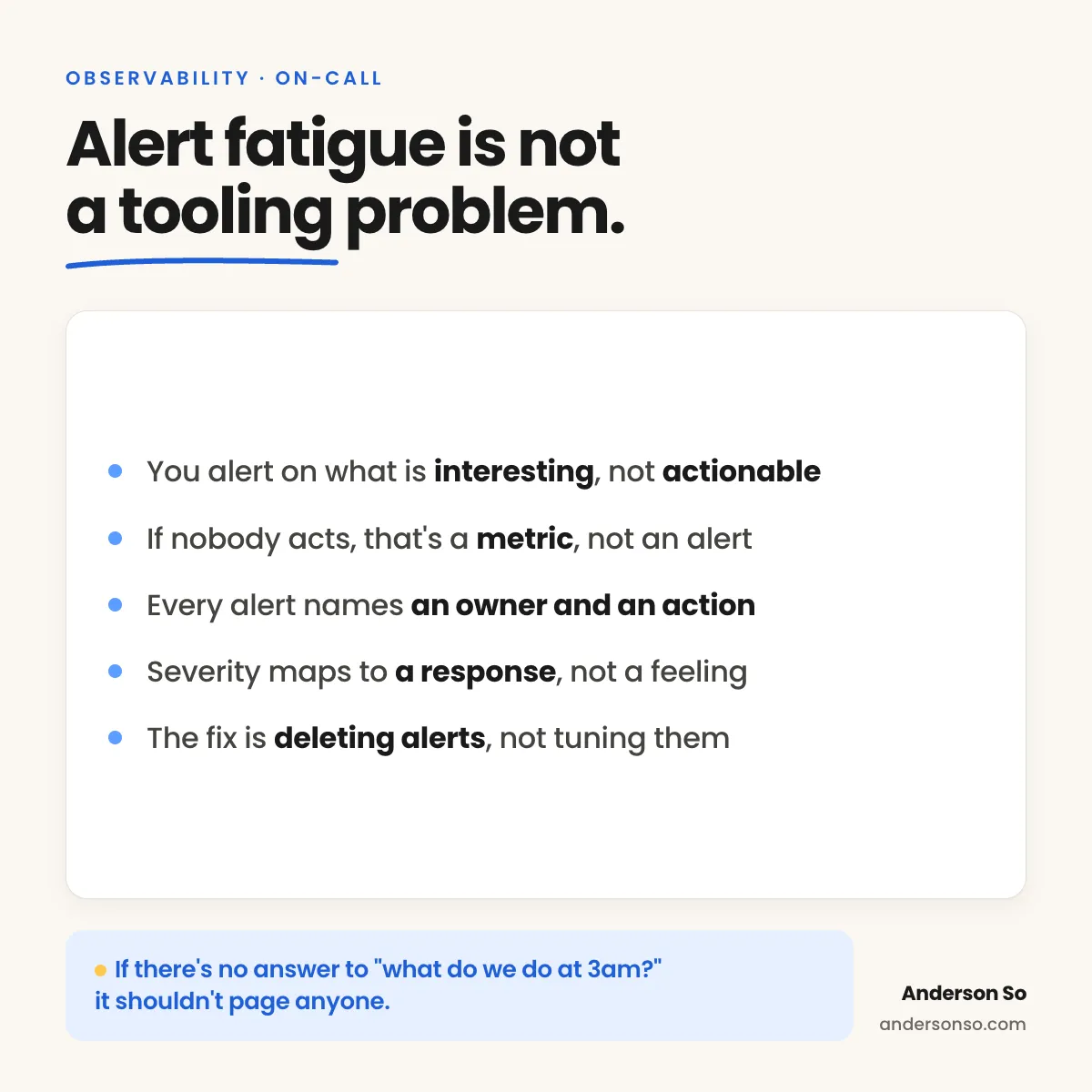
- Alerts were created for things that are interesting, not things that are actionable
- If nobody has to do anything when it fires, that’s a metric, not an alert
- Every surviving alert should name an owner and an action
- Severity should map to a response, not to a feeling
- The fix is deleting alerts, and nobody gets promoted for deleting things
Noise isn’t a tooling problem. It’s a decision nobody wanted to make.
The question isn’t “what should we alert on?”
The question is “what will we actually do at 3am when this fires?”
If there’s no answer, it shouldn’t page anyone.
How many of your alerts would survive that test?
First posted on LinkedIn. Join the conversation there (opens in a new tab)